

Digital Marketing vs Traditional Marketing for Medical Practices
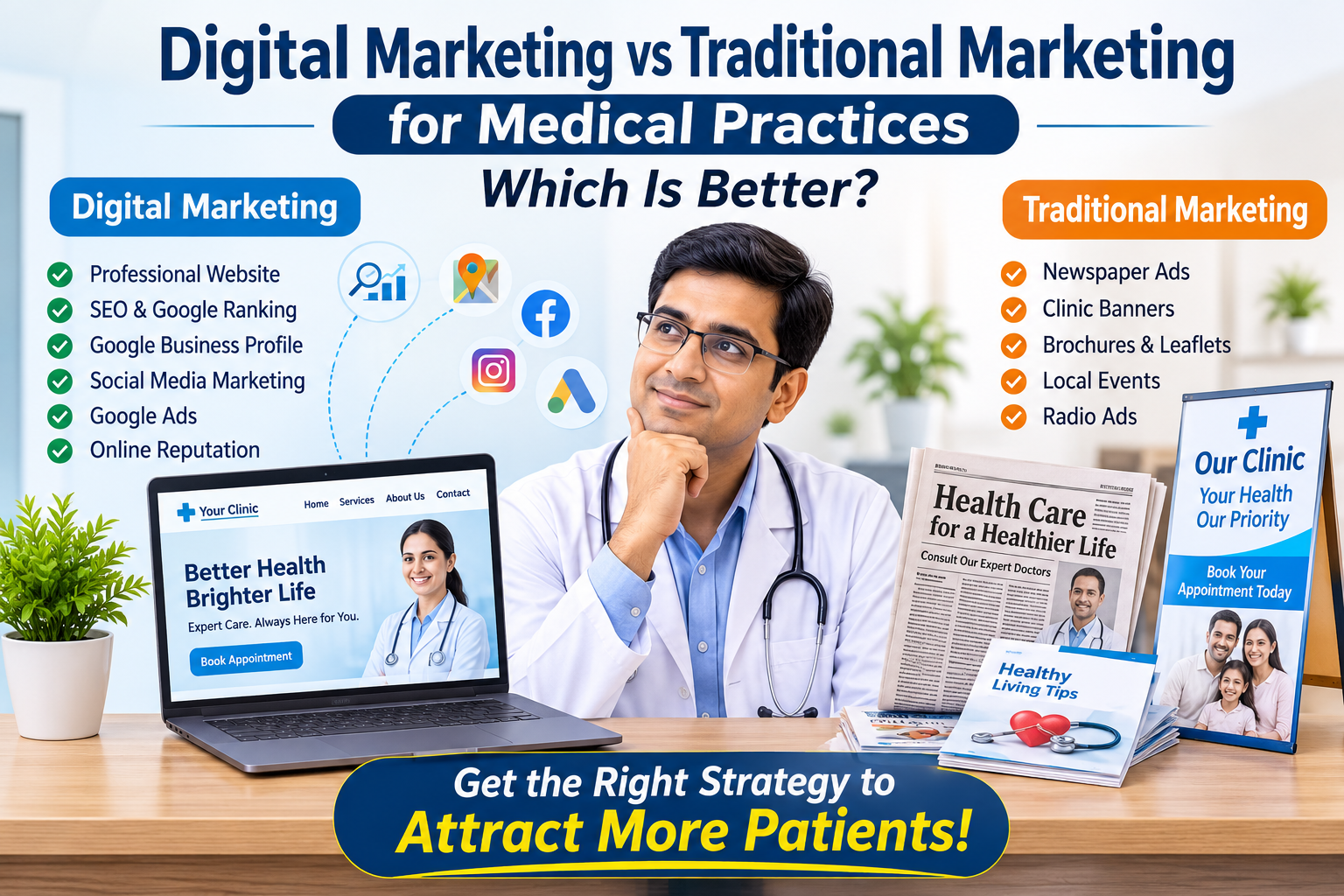
The healthcare industry has changed significantly over the past few years. Today, patients no longer depend only on newspaper advertisements, banners, referrals, or word-of-mouth recommendations to find a doctor. Many people search on Google, check clinic websites, read patient reviews, and explore social media before choosing a healthcare provider.
This shift has made marketing an important part of growing a medical practice. Doctors, clinics, and hospitals now have two major marketing approaches to consider: digital marketing and traditional marketing.
Both methods can help healthcare professionals reach potential patients, build trust, and improve brand awareness. However, they work differently and offer different advantages. Understanding the difference between digital marketing and traditional marketing can help doctors choose the right promotional strategy for their medical practice.
What Is Digital Marketing for Medical Practices?
Digital marketing refers to promoting medical services through online platforms and digital channels. It helps doctors connect with potential patients who use the internet to search for healthcare information and medical services.
Some common digital marketing methods include:
- Medical Website Development: Creating a professional website that displays doctor profiles, qualifications, specializations, clinic locations, services, and appointment information.
- Search Engine Optimization (SEO): Optimizing a medical website to improve its visibility on Google when people search for doctors, clinics, or specific treatments.
- Google Business Profile Optimization: Helping clinics appear in local Google Search and Google Maps results.
- Social Media Marketing: Using platforms like Facebook, Instagram, and YouTube to share healthcare information, clinic updates, and educational content.
- Google Ads: Running paid advertisements to reach people searching for relevant medical services.
- Content Marketing: Publishing health-related blogs, articles, FAQs, and educational resources to answer common patient questions.
- Online Reputation Management: Monitoring and responding professionally to patient reviews and feedback.
Digital marketing allows doctors to reach a wider audience and build an online presence that patients can access at any time.
What Is Traditional Marketing for Medical Practices?
Traditional marketing includes offline promotional activities that do not primarily depend on the internet. These methods have been used by healthcare providers for many years to promote their clinics and medical services.
Common traditional marketing methods include:
- Newspaper and magazine advertisements
- Clinic banners and outdoor hoardings
- Printed brochures and leaflets
- Visiting cards and promotional materials
- Local event sponsorships
- Community health awareness programs
- Radio advertisements
- Local newspaper announcements
Traditional marketing can be particularly useful for connecting with people in a specific geographical area. For example, a new clinic can distribute brochures in nearby residential areas or put up signboards to make local residents aware of its services.
However, measuring the exact number of patients generated through traditional advertising can sometimes be difficult.
Digital Marketing vs Traditional Marketing: Key Differences
Although both marketing approaches aim to promote medical services, their reach, cost, measurement, and communication methods are different.
1. Audience Reach
Digital marketing allows doctors to reach patients beyond their immediate neighbourhood. A well-optimized website can attract visitors from different cities or regions, depending on the services offered.
For example, a specialist doctor can receive online inquiries from patients searching for a particular treatment or medical consultation.
Traditional marketing generally focuses on a specific geographical area. Newspaper advertisements, banners, and leaflets are useful for reaching people within a particular locality.
Winner: Digital Marketing for wider reach, while traditional marketing remains useful for neighbourhood-level awareness.
2. Marketing Cost
Budget is an important consideration for doctors, especially those starting a new clinic or running a small medical practice.
Digital marketing offers flexible budget options. Doctors can start with a basic website, local SEO, and social media presence before investing in paid advertisements. SEO can also help generate organic website traffic over time.
Traditional marketing may require repeated spending on printing, newspaper advertisements, banners, and distribution.
For example, a clinic may need to print new brochures whenever its contact information, services, or consultation timings change.
Winner: Digital Marketing for flexibility and long-term online visibility, although results depend on the strategy and competition.
3. Targeting the Right Patients
One of the biggest advantages of digital marketing is audience targeting.
With Google Ads and social media advertising, healthcare businesses can reach audiences based on factors such as location, search intent, and other permitted advertising criteria.
For example, a dental clinic can promote its services to people searching for dental clinics in its service area.
Traditional marketing generally offers less precise targeting. A newspaper advertisement or leaflet may reach many people who are not actively looking for medical services.
Winner: Digital Marketing for more focused audience targeting.
4. Measuring Marketing Performance
Digital marketing provides several tools to track campaign performance.
Doctors and clinic owners can monitor:
- Website visitors
- Google Search impressions and clicks
- Phone calls and appointment inquiries
- Google Business Profile interactions
- Social media engagement
- Advertising clicks and conversions
These insights help healthcare providers understand which marketing activities are generating interest.
In traditional marketing, it is more difficult to measure performance accurately. A clinic may distribute thousands of leaflets but may not know how many people visited because of that campaign.
Winner: Digital Marketing because it offers better performance tracking and reporting.
5. Building Patient Trust
Trust is essential in healthcare. Patients want to know about a doctor’s qualifications, experience, specialization, clinic facilities, and professional background before making an appointment.
A professional medical website can provide this information in an organized way. Educational blog posts, genuine patient feedback, and an informative Google Business Profile can also help establish credibility.
Traditional marketing can build local familiarity through community programs, printed information, and personal interactions.
Both methods can contribute to building trust, but digital platforms allow patients to research a healthcare provider whenever they need.
Winner: Both, depending on how effectively they are used.
6. Communication with Patients
Digital marketing makes communication more convenient through website contact forms, appointment request systems, email, and permitted messaging channels.
Patients can check clinic information and submit inquiries without visiting the clinic physically.
Traditional marketing usually depends on phone calls, printed information, or direct visits. While these methods still work, they may not offer the same level of convenience.
Winner: Digital Marketing for accessibility and convenience.
7. Long-Term Marketing Benefits
A newspaper advertisement generally stops generating exposure once the publication period ends. Similarly, banners and leaflets have a limited promotional lifespan.
Digital marketing can deliver long-term benefits. A well-written healthcare blog, properly optimized service page, or established Google Business Profile can continue attracting relevant visitors over time.
However, websites and online listings require regular updates, maintenance, and SEO improvements to remain effective.
Winner: Digital Marketing for long-term online visibility.
Why Doctors Should Invest in Digital Marketing
Modern patients increasingly use online resources when searching for healthcare providers. Having a strong digital presence helps doctors make their services easier to discover.
Here are some important reasons why digital marketing is valuable for medical practices.
1. Improve Visibility on Google
When someone searches for a doctor or clinic in a particular area, appearing prominently in relevant search results can help attract attention. Local SEO, quality website content, and Google Business Profile optimization can improve online visibility.
2. Attract More Relevant Patient Inquiries
A professional website can provide important information about treatments, specializations, consultation timings, and appointment procedures. This helps potential patients understand whether the clinic offers the services they need.
3. Build a Professional Online Identity
A well-designed website and active online presence can communicate a clinic’s professionalism. Doctors can showcase their qualifications, experience, facilities, and areas of specialization.
4. Educate Patients Through Healthcare Blogs
Publishing informative articles allows doctors to answer common health-related questions. Topics such as preventive care, treatment procedures, symptoms, and general health awareness can attract relevant website visitors.
Medical content should be accurate, reviewed by qualified professionals, and avoid making misleading treatment promises.
5. Stay Connected with Existing Patients
Social media and digital communication channels can help clinics share holiday schedules, health awareness messages, new service announcements, and other useful updates.
Can Traditional Marketing Still Work for Doctors?
Yes. Traditional marketing has not become irrelevant. It can still play an important role, especially for clinics that depend on patients from nearby residential areas.
For example, a newly opened clinic can use signboards, brochures, and local community awareness programs to introduce its services.
Traditional methods can also be useful for reaching people who are less comfortable using digital platforms.
However, relying entirely on offline advertising may limit a medical practice’s ability to connect with patients who prefer searching online.
The Best Strategy: Combine Digital and Traditional Marketing
Instead of choosing only one approach, doctors should consider combining digital and traditional marketing.
An integrated strategy can help a medical practice build local awareness while maintaining a strong online presence.
Here is a practical marketing approach for doctors and clinics:
- Develop a Professional Website: Include doctor profiles, qualifications, specializations, services, clinic address, contact details, and appointment options.
- Optimize Google Business Profile: Add accurate clinic information, working hours, photographs, and relevant service details.
- Invest in Local SEO: Optimize website pages for location-based searches to improve visibility among nearby patients.
- Publish Healthcare Blogs: Share useful and medically accurate information to educate patients and improve website visibility.
- Maintain Social Media Pages: Post health awareness content, clinic announcements, and professional updates.
- Run Targeted Google Ads: Promote relevant medical services to people searching for them in the clinic’s service area.
- Use Local Promotional Materials: Distribute brochures and display clinic signboards to improve offline awareness.
- Monitor Patient Feedback: Encourage genuine feedback and respond professionally to reviews while respecting patient privacy.
All marketing activities should follow applicable medical advertising, professional ethics, privacy, and platform policies. Doctors should avoid misleading claims, guaranteed treatment outcomes, or inappropriate use of patient testimonials.
Both digital marketing and traditional marketing have their own advantages for medical practices. Traditional marketing helps doctors build awareness within their local communities, while digital marketing offers better online visibility, audience targeting, performance tracking, and convenient patient communication.
For doctors, clinics, and hospitals looking to grow in today’s competitive healthcare industry, investing in digital marketing is becoming increasingly important. A professional website, effective SEO, Google Business Profile optimization, and useful healthcare content can help establish a strong online presence.
The best approach is to combine digital and traditional marketing according to the clinic’s goals, target audience, and available budget.
Looking to grow your medical practice online? A well-planned digital marketing strategy can help your clinic improve its visibility, build credibility, and connect with more potential patients.

Bijoy
Author