

10 Essential Features of a Successful Travel Website
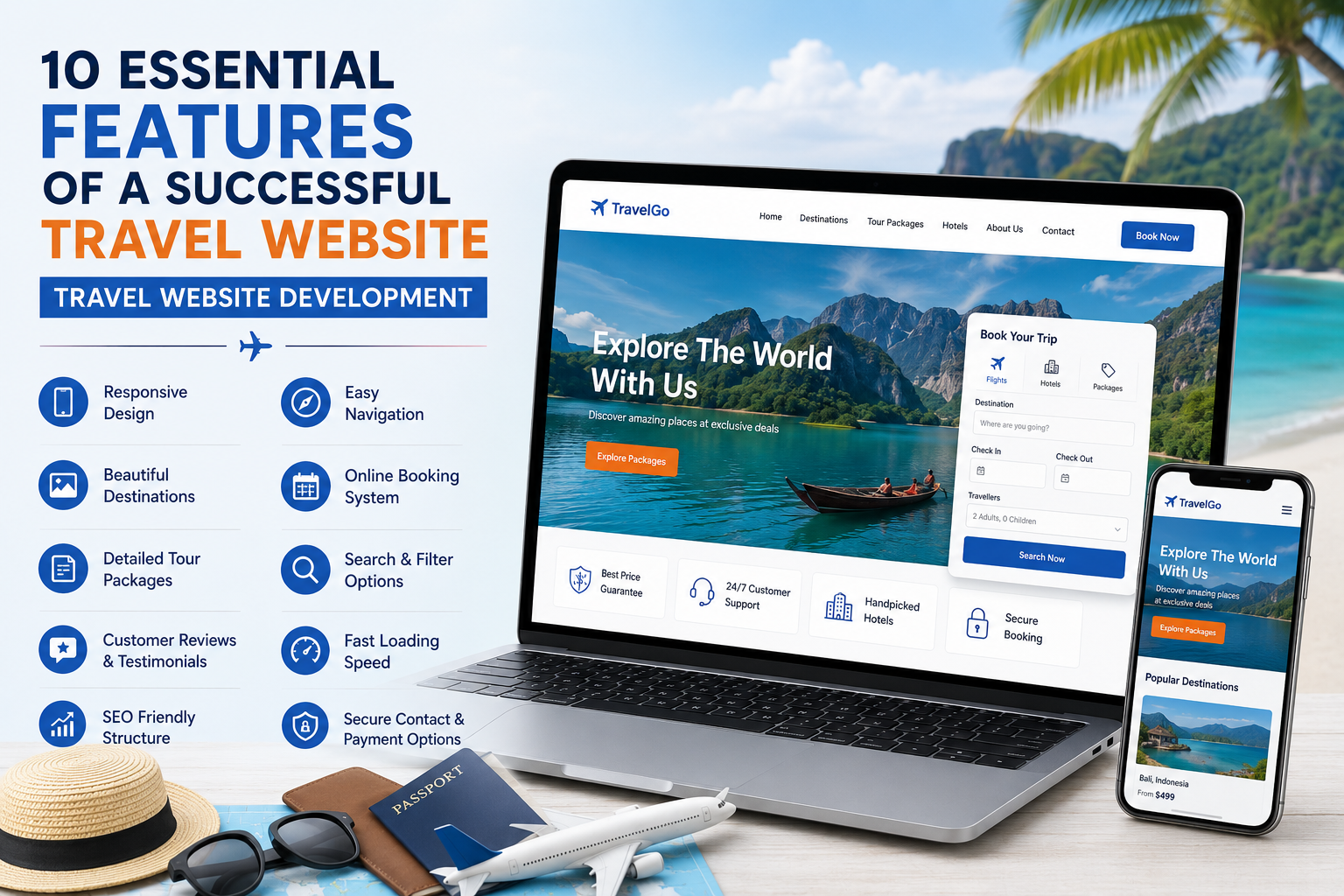
The travel industry has changed significantly with the growth of digital technology. Today, travelers prefer to research destinations, compare packages, check availability, and make bookings online before planning their trips. For travel agencies, tour operators, and destination management companies, having a professional online presence is no longer optional.
This is where travel website development plays an important role. A well-designed travel website can showcase destinations, promote tour packages, generate inquiries, accept bookings, and provide customers with a smooth digital experience.
Here are 10 essential features that every successful travel website should have.
1. Responsive and Mobile-Friendly Design
A large number of travelers use smartphones to search for destinations, hotels, flights, and tour packages. Therefore, a travel website must work smoothly across smartphones, tablets, laptops, and desktops.
Responsive design automatically adjusts the website layout according to the visitor’s screen size. A mobile-friendly website also makes it easier for users to browse packages, view images, contact the agency, and complete bookings.
A professional travel website development strategy should always prioritize mobile responsiveness from the beginning.
2. Easy-to-Use Navigation
Travel websites often contain a large amount of information, including destinations, tour packages, hotels, activities, travel guides, and booking options.
If visitors cannot find the information they need quickly, they may leave the website.
A clear navigation structure should include sections such as:
- Destinations
- Tour Packages
- Hotels & Accommodation
- Travel Guides
- About Us
- Contact
- Booking
Simple navigation improves the user experience and helps visitors move from researching a destination to making a booking.
3. Attractive Destination Pages
Travel is highly visual, so images and videos can have a major impact on customer decisions.
Each destination should have a dedicated page containing useful information such as:
- Destination highlights
- Popular attractions
- Best time to visit
- Things to do
- Accommodation options
- Travel tips
- Tour packages
- High-quality photographs
During travel website development, destination pages should be designed to combine attractive visuals with useful information rather than simply displaying large images.
4. Online Booking and Inquiry System
One of the most important features of a travel website is an easy booking or inquiry system.
Customers should be able to select a package, choose their preferred dates, provide traveler information, and submit their booking request without unnecessary steps.
Depending on the business model, the website may include:
- Tour booking forms
- Hotel booking
- Activity reservations
- Date selection
- Availability checking
- Booking confirmation
- Online payment
A streamlined booking process can help turn website visitors into actual customers.
5. Detailed Tour Package Information
Travelers want to know exactly what they are getting before purchasing a package.
Every tour package should clearly display important information such as:
- Package price
- Duration
- Destination
- Day-by-day itinerary
- Accommodation details
- Transportation
- Meals
- Activities
- Inclusions and exclusions
- Cancellation policies
A well-organized package page reduces customer confusion and makes the purchasing decision easier.
6. Powerful Search and Filtering
Travel websites can contain dozens or even hundreds of tour packages. Finding the right option should not require visitors to browse every page.
A powerful search and filtering system can allow users to find packages based on:
- Destination
- Budget
- Travel duration
- Travel type
- Departure date
- Activities
- Number of travelers
This feature is particularly valuable for larger travel businesses and online travel platforms.
7. Customer Reviews and Testimonials
Trust is extremely important when people are purchasing travel services online.
Customer reviews and testimonials can provide social proof and help potential travelers feel more confident about choosing a travel company.
A successful website can display:
- Customer ratings
- Written reviews
- Traveler photographs
- Google reviews
- Testimonials
- Tour experiences
Reviews should be presented clearly without overwhelming the visitor.
8. Fast Loading Speed
Website speed directly affects user experience. Travelers may leave a website if pages take too long to load, especially when browsing from mobile devices or slower internet connections.
Travel websites often contain high-resolution photographs, maps, videos, and other media, so performance optimization is essential.
During travel website development, developers should consider image compression, modern image formats, caching, optimized code, and reliable hosting to improve website performance.
9. SEO-Friendly Structure
A beautiful travel website is not enough if potential customers cannot find it through search engines.
Search engine optimization should be considered during the development process. Important elements include:
- SEO-friendly URLs
- Proper heading structure
- Optimized page titles and meta descriptions
- Fast loading speed
- Mobile responsiveness
- Internal linking
- Image optimization
- Structured data where appropriate
- Useful travel content
A combination of travel website development and SEO can help travel businesses increase their visibility and attract relevant organic traffic.
10. Secure Contact and Payment Options
Travel websites often collect personal information, booking details, and payment information. Security should therefore be a major consideration.
The website should use HTTPS and follow appropriate security practices. If online payments are available, the business should integrate a trusted payment gateway and provide customers with a secure checkout experience.
The website should also make it easy for visitors to contact the business through phone, email, WhatsApp, contact forms, or other relevant channels.
Why Professional Travel Website Development Matters
A travel website is more than an online brochure. It can become an important sales and marketing platform for a travel business.
Professional travel website development can help businesses create a website that combines attractive design, useful travel information, booking functionality, SEO, performance, and security.
A successful travel website should ultimately make the customer’s journey easier—from discovering a destination to researching packages and finally making a booking.
The modern traveler expects convenience, speed, attractive content, and easy online booking. Travel businesses that invest in a well-planned website can provide a better customer experience while creating new opportunities for online growth.
From responsive design and destination pages to booking systems, SEO, reviews, and secure payments, these features form the foundation of an effective travel website.
Whether you are launching a new travel agency website or upgrading an existing platform, focusing on these essential features can help create a professional and customer-friendly online presence.

Bijoy
Author